Utility Billing
North Dakota Solar Buyback: Why MDU's Monthly Excess Credit Is Not the Retail Rate
Monthly netting does not mean all surplus carries forward at retail value. MDU's North Dakota tariff illustrates why the account and billing period matter.
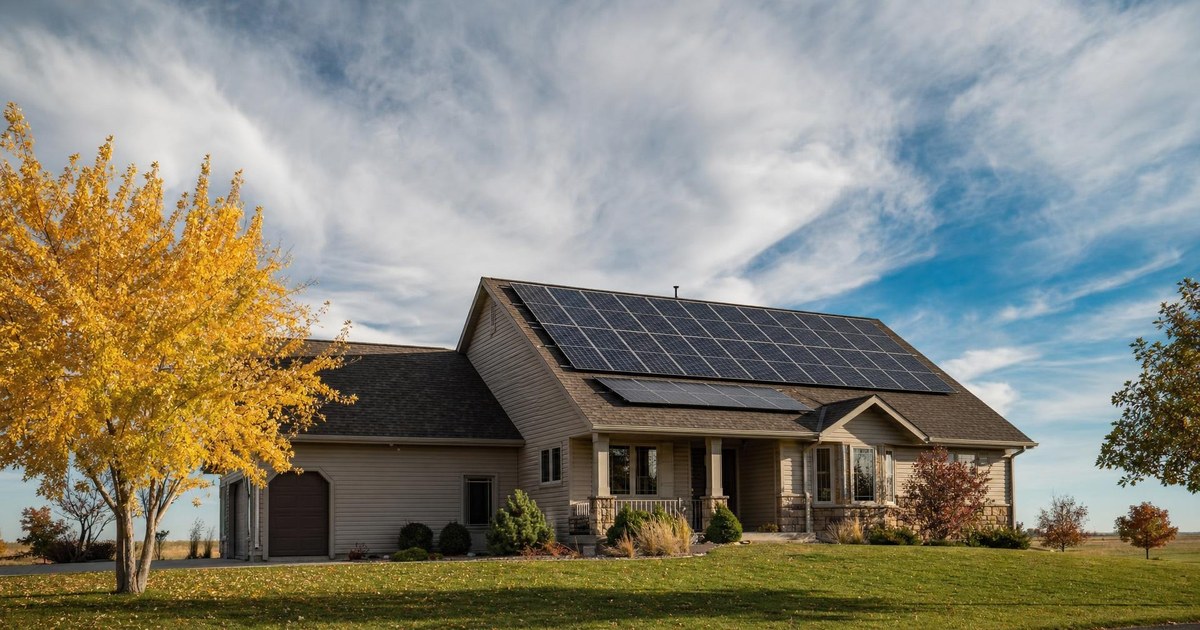
A North Dakota homeowner can hear that solar is “net metered” and reasonably expect excess production to offset future purchases at the same price. That expectation needs to be checked against the utility tariff.
North Dakota has a net-energy-billing rule for qualifying facilities, but it does not create one uniform dollar payment for every utility customer. This article uses Montana-Dakota Utilities, or MDU, as the concrete example. Its figures should not be applied to a cooperative, municipal provider or another investor-owned utility.
A net-billing entitlement is not a statewide price
North Dakota Administrative Code section 69-09-07-09 provides net-energy billing for qualifying facilities with design capacity of 100 kW or less within the rule's utility scope. It also addresses avoided-cost purchases and metering-cost recovery. The chapter defines its covered electric utilities by reference to state law.
The practical starting point is therefore the utility and the chosen purchase arrangement. Ask the provider to identify the schedule and election recorded for the system. Do not assume that a state-level description tells you the actual excess price or payment timing.
MDU separates the monthly balance from the purchase price
MDU's current North Dakota Rate 95 offers a net-billing option as well as simultaneous purchase and sale. Under net billing, metered generation is subtracted from consumption for the billing period. When generation exceeds consumption, the tariff values the net excess at 3.416 cents per kWh. The excess-payment page is effective January 1, 2026; the current first page is effective September 1, 2026.
For illustration, 300 kWh of monthly net excess at that price has an energy value of $10.248, about $10.25, before other account treatment. It is not a promise that 300 kWh will remain available to offset a later month's retail purchases.
The tariff also contains metering charges and provides for annual review and approved revisions. A current purchase price should not be projected as fixed for the duration of an unrelated solar loan.
Use the tariff instead of an old website example

MDU's solar information page displayed $0.0269 per kWh when checked on October 15, 2026, while its currently linked North Dakota Rate 95 shows the newer figure above. The tariff controls this example. and
That discrepancy is a useful warning about an estimate copied from a web page. Ask for the state, schedule, revision and effective date behind the number. MDU serves multiple states, so even a genuine company document may describe the wrong jurisdiction.
The billing period can change the result
An annual chart can conceal months with surplus and months with substantial purchases. If an estimate assumes summer excess remains a retail-priced energy bank for winter, ask the seller to point to the provision authorizing that treatment.
Request a month-by-month model applying the selected tariff. Keep production and consumption records aligned to the utility's billing dates. A monitoring application's calendar-month output may not match the dates on the bill, and that mismatch can make a sound calculation look wrong.
Also verify the arrangement before a proposed expansion. MDU's general qualifying-facility rules address interconnection, metering and additional facilities. A new equipment proposal should include the utility's account-specific requirements rather than treating a larger array as a purely sales decision.
Preserve the difference between promise and performance
Gather the signed proposal, tariff election, interconnection approval, monthly bills and production reports. Identify whether the shortfall comes from output, the excess price, timing, omitted charges or a financing assumption. Keep original sales materials even if the seller supplies a revision.
Solar Exit's billing-review path and contract review can help organize those questions. A forecast that does not match the tariff needs an explanation; it does not automatically establish a legal remedy.
General consumer information, not legal, tax, mortgage or electrical advice. Tariff eligibility, payments and contract outcomes depend on the applicable facts.
Sources Reviewed
- Official administrative code, chapter 69-09-07Reviewed October 15, 2026Verified October 15, 2026. NDAC69-09-07-09, historical rule June1,1981 amended May1,1991, qualifying capacity100kW or less within defined utility scope. MDU Rate95 first page fourth revision September1,2026 PU-26-241; excess page third revision January1,2026 PU-25-276,3.416cents/kWh. 300kWh example10.248 dollars. Interim retail adjustment is not represented as export increase or final case disposition. Rate140 July1,2023 PU-22-194 used only for general metering/interconnection requirements.
- MDU North Dakota Rate 95Reviewed October 15, 2026Verified October 15, 2026. NDAC69-09-07-09, historical rule June1,1981 amended May1,1991, qualifying capacity100kW or less within defined utility scope. MDU Rate95 first page fourth revision September1,2026 PU-26-241; excess page third revision January1,2026 PU-25-276,3.416cents/kWh. 300kWh example10.248 dollars. Interim retail adjustment is not represented as export increase or final case disposition. Rate140 July1,2023 PU-22-194 used only for general metering/interconnection requirements.
- MDU solar overviewReviewed October 15, 2026Verified October 15, 2026. NDAC69-09-07-09, historical rule June1,1981 amended May1,1991, qualifying capacity100kW or less within defined utility scope. MDU Rate95 first page fourth revision September1,2026 PU-26-241; excess page third revision January1,2026 PU-25-276,3.416cents/kWh. 300kWh example10.248 dollars. Interim retail adjustment is not represented as export increase or final case disposition. Rate140 July1,2023 PU-22-194 used only for general metering/interconnection requirements.
- current tariff indexReviewed October 15, 2026Verified October 15, 2026. NDAC69-09-07-09, historical rule June1,1981 amended May1,1991, qualifying capacity100kW or less within defined utility scope. MDU Rate95 first page fourth revision September1,2026 PU-26-241; excess page third revision January1,2026 PU-25-276,3.416cents/kWh. 300kWh example10.248 dollars. Interim retail adjustment is not represented as export increase or final case disposition. Rate140 July1,2023 PU-22-194 used only for general metering/interconnection requirements.
- MDU Rate 140Reviewed October 15, 2026Verified October 15, 2026. NDAC69-09-07-09, historical rule June1,1981 amended May1,1991, qualifying capacity100kW or less within defined utility scope. MDU Rate95 first page fourth revision September1,2026 PU-26-241; excess page third revision January1,2026 PU-25-276,3.416cents/kWh. 300kWh example10.248 dollars. Interim retail adjustment is not represented as export increase or final case disposition. Rate140 July1,2023 PU-22-194 used only for general metering/interconnection requirements.